Behind the plate / Busog editorial
Follow a dish back to its ingredients
An original Busog guide to recipe arithmetic.
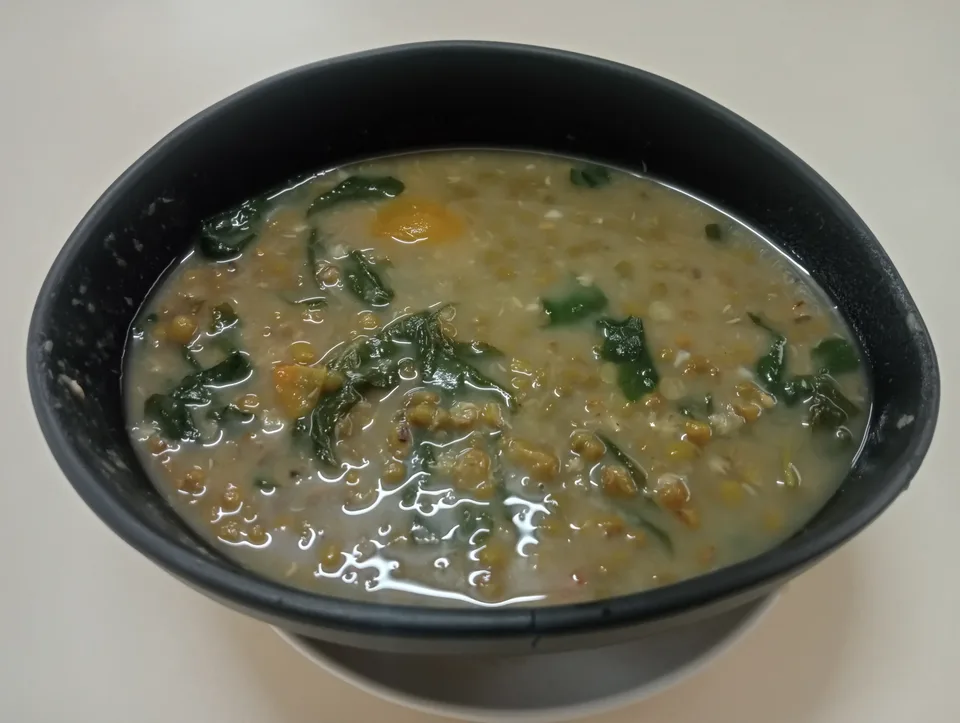
Illustrative photograph. Credits and sources.
Begin with an ingredient list
A dish name is a useful shortcut, but it is not nutrition data. Busog’s ginisang munggo composition names its mung beans, greens, tomato, onion and oil. Each ingredient has a USDA record and a gram weight. The total is the result of those choices.
Scale, then add
For each ingredient, divide its grams by 100 and multiply by the published per-100g value. Repeat for calories, protein, carbohydrate and fat. Add the ingredient results. Divide the batch by its declared serving count. Busog keeps the unrounded values during these steps and rounds only what it displays.
Keep the assumptions visible
The full measured oil and sauce stay in this composition. If some is left in a pan, the plated result differs. If your cook uses pork, coconut milk or a different amount of oil, that is another recipe. A transparent total is still a model with a defined ingredient list.
Inspect before accepting
The How we counted this panel exposes the calculation and source links. It gives you a way to judge a dish against your own meal. The goal is a traceable starting point, not a claim of laboratory accuracy.
Open Busog and the food library. Ingredient references: USDA FoodData Central.
This article is general information, not individual medical or dietary advice.