Food data / Busog editorial
The small detail that changes a food log
An original Busog guide to matching food states.
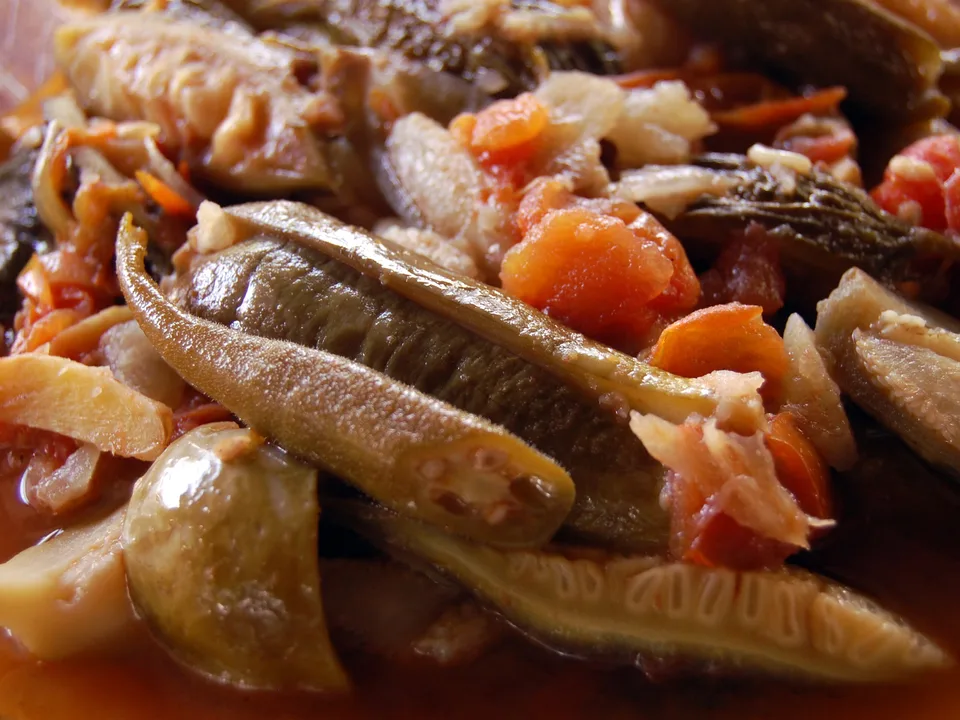
Illustrative photograph. Credits and sources.
Match the food to the scale
A gram weight only makes sense beside the right food record. Raw and cooked entries describe different states. Rice takes up water when it cooks; a drained vegetable has already lost some water. Use the USDA description to check the state before you apply a weight.
Read past the first word
Search results can look similar at a glance. The useful words may be at the end: boiled, drained, roasted, with salt, without salt. Busog preserves the original description and FDC ID even when it shows a familiar Filipino display name first. That makes the selection open to inspection.
Recipe components stay explicit
Busog recipes use the ingredient states written in the snapshot. The chicken composition uses cooked stewed breast; the rice uses a cooked record. The instructions tell you to begin with those components. No hidden cooking-yield percentage converts raw weights into cooked portions.
When your meal differs
Choose a closer record or adjust the composition rather than treating a familiar dish name as proof of a match. Food records are useful references. They cannot describe every variety, cooking method and portion on their own.
Open Busog and the food library. Ingredient references: USDA FoodData Central.
This article is general information, not individual medical or dietary advice.